A Comprehensive Guide to Processing Blown Film Extrusion

Understanding the Basics of Blown Film Extrusion

Blown film extrusion is a widely utilized process in the manufacturing of flexible plastic films, crucial for producing numerous products, including plastic bags and other packaging solutions. This method involves the continuous extrusion of thermoplastic material, most commonly polyethylene, which is then transformed into a thin film through a series of intricate steps. The primary purpose of blown film extrusion is to create films that exhibit strength, durability, and versatility, making them ideal for various industrial applications.

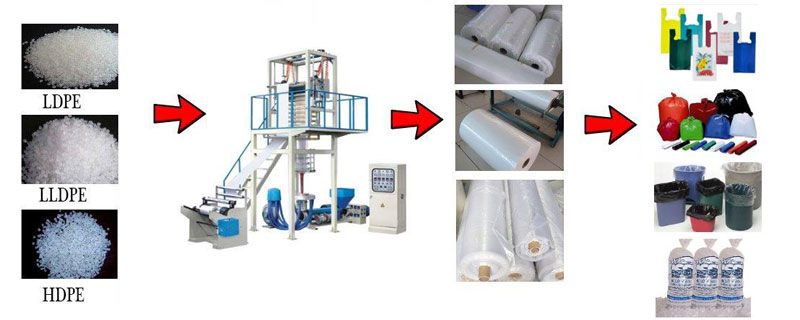
The process begins with the use of an extruder, a machine designed to melt and homogenize the plastic material. The extruder feeds plastic pellets into a heated chamber where they are melted and pushed through a die. The die forms the molten plastic into a circular bubble shape, hence the term “blown” film. As the plastic exits the die, air is introduced, inflating the film bubble and determining the film’s final thickness.

Cooling plays a vital role in solidifying the plastic film. A cooling system surrounds the film bubble to lower its temperature and ensure it retains its mechanical properties. Once the cooling process is complete, the film is flattened and wound onto rolls for subsequent use. The standard materials used in blown film extrusion include low-density polyethylene (LDPE) and linear low-density polyethylene (LLDPE), chosen for their favorable characteristics such as flexibility and clarity.

Blown film extrusion holds significant importance across various industries, from agriculture to packaging. Its adaptability allows manufacturers to produce films with differing properties and functionalities, catering to the diverse demands of the market. Understanding these foundational aspects of blown film extrusion is essential for anyone involved in the flexible plastic film industry, providing insight into how this dynamic process operates and its implications for product development.
Key Parameters Influencing Blown Film Quality

The quality of blown film produced through the blown film extrusion process is significantly influenced by several critical parameters. Understanding these factors is essential for optimizing the performance of film blowing machines and ensuring the production of high-quality polyethylene plastic film. Key attributes that determine the final product’s characteristics include melt temperature, die gap, air cooling rate, and specific material properties.

Melt temperature is one of the foremost parameters to control, as it affects the viscosity of the molten polymer. An inadequate melt temperature can lead to poor flow characteristics, resulting in non-uniform thickness and compromised strength of the plastic bag produced. Conversely, excessively high temperatures can degrade the polymer, adversely affecting the clarity and overall quality of the film.

The die gap, which refers to the distance between the die lips where the molten polymer exits, also plays a vital role in determining film thickness and uniformity. A consistent die gap ensures that the extruded film maintains a uniform gauge, preventing defects such as web breaks and inconsistencies in the plastic film’s quality. Furthermore, the air cooling rate, which is essential for cooling the extruded film immediately post-extrusion, directly impacts the physical properties of the film. A well-controlled cooling rate solidifies the film, leading to improved dimensional stability and strength.

In addition to monitoring these parameters, understanding the properties of the raw materials used is crucial. Different polyethylene grades can exhibit varying behaviors during the extrusion process, thereby influencing the resultant film’s characteristics. Implementing robust quality control measures throughout the extrusion process is imperative to maintain consistency and achieve optimal film performance, ensuring that the blown film meets specified standards.

Troubleshooting Common Blown Film Extrusion Issues

The blown film extrusion process can present various challenges that may hinder the production of high-quality plastic films, commonly used in applications such as plastic bags and packaging materials. Understanding the common issues, such as film bubbles, uneven thickness, and surface defects, is crucial for maintaining optimal production standards and minimizing downtime.

One prevalent issue that operators encounter during the blown film extrusion process is the formation of film bubbles. These bubbles often arise from improper die setup or insufficient venting in the film blowing machine. To address this, operators should ensure that the die is properly aligned and that venting channels are clear. Additionally, adjusting the air pressure and extruder temperature can also help eliminate these unwanted bubbles, leading to a smoother polyethylene film.

Another common problem is uneven film thickness, which can result from inconsistent extrusion rates or fluctuating temperatures within the extrusion system. To mitigate this issue, operators should regularly calibrate the film blowing machine and monitor the temperature profiles throughout the extrusion process. Employing an automatic thickness control system can also prove beneficial, as it allows real-time adjustments to be made, ensuring that the final product meets the desired specifications.

Surface defects, such as streaks or dirt particles on the finished plastic film, can drastically affect the quality of the end product. These defects often stem from inadequate cleaning of the extruder or the cooling rollers. Therefore, regular maintenance and cleaning routines should be established to keep the equipment in optimal condition. Additionally, ensuring a clean working environment can prevent contamination during production.

By systematically identifying and addressing these common issues associated with blown film extrusion, operators can enhance productivity and maintain a consistent output of high-quality plastic films, ultimately leading to greater satisfaction in applications involving polyethylene and other plastic films.

Future Trends in Blown Film Extrusion Technology

The blown film extrusion process has witnessed significant innovations over the years, and the future promises further advancements that will transform the industry. One of the primary trends is the development of new materials aimed at enhancing the performance of the final product. Researchers are exploring high-performance polyethylene blends and the incorporation of additives that improve the mechanical properties and barrier characteristics of plastic film. These innovations ensure that blown films can meet the stringent demands of various applications, including food packaging, agricultural films, and industrial uses.

Another noteworthy trend in blown film extrusion technology is the increasing automation in the extrusion process. The introduction of smart technologies and advanced controls within the film blowing machine allows for greater precision and efficiency. Automation reduces labor costs, minimizes human error, and streamlines the overall production process. Furthermore, real-time monitoring and data analytics enable manufacturers to optimize their production run, resulting in improvements in quality consistency and film attributes.

Sustainability is at the forefront of many industries, and blown film extrusion is no exception. Innovations in biodegradable films made from renewable resources are gaining traction. These eco-friendly alternatives, designed to be used as plastic bags or other packaging products, mitigate environmental impacts and adhere to growing consumer demand for sustainable solutions. Emphasizing circular economies, manufacturers are also exploring recycling technologies to process used polyethylene films back into the production cycle, which has a considerable potential for reducing waste.

Moreover, the influence of Industry 4.0 continues to reshape blown film production. The integration of IoT devices and machine learning into extrusion lines leads to better predictive maintenance and energy efficiency. This data-driven approach not only enhances productivity but also significantly contributes to reducing the environmental footprint of film production. As these trends evolve, driven by both technological advancements and societal needs, they will undeniably redefine the landscape of blown film extrusion technology.

Leave a Reply

Your email address will not be published. Required fields are marked *

Related Post

The Beginners Guide To (Getting Started 101)The Beginners Guide To (Getting Started 101)

Fix It with Our Cellular DAS System Design
In today’s fast-paced, technology-driven globe, efficient cellular communication is essential for services and organizations throughout various sectors. Read more about das system installation in this website. The need for uninterrupted mobile connectivity remains to grow, especially in settings such as big structures, arenas, and metropolitan locations with high mobile website traffic. Learn more about das system installers in this homepage. Our Cellular Distributed Antenna System (DAS) design offers a robust service to boost mobile coverage and ability, making certain smooth connectivity for customers. View more about das system install in this page.

A Mobile DAS is a network of spatially separated antenna nodes that assist in far better cell signal circulation within a structure or certain location. Check Cel-Fi QUATRA das system installers here for more info. By dispersing the signals of cellular networks throughout a designated room. Read more about in building wireless solutions in this website. a DAS enhances gain access to and minimizes dead areas that can disrupt interactions. Discover more about Cellular DAS System in this link. This is especially important in places such as healthcare facilities, colleges, and company offices where reputable connection is a necessity. Checkout Commercial Cell phone Booster in this site. Our style not just addresses existing concerns however also adapts to future infrastructural demands, making sure sustainability gradually. Read Distributed Antenna System here for more info.

Our Cellular DAS system style is customized to satisfy your particular needs. Click in building das systems here for more updates. We begin with an in-depth site study and analysis, recognizing areas of inadequate signal toughness and high web traffic demand. View corning das system here for more details. With this info, we can develop a custom system that strategically positions antennas for ideal insurance coverage. Read more about commscope active das system in this website. This personalized method makes sure that all facets of your environment are considered, resulting in a trusted and efficient remedy for connected interaction. Learn more about JMA DAS system in this homepage.

Furthermore, our DAS solutions are developed with scalability in mind. View more about Solid DAS systems in this page. As technology develops and the number of smart phones increases, our systems can be updated without comprehensive framework adjustments. Check das system design here for more info. This versatility makes it possible for businesses to keep pace with demand while maintaining high levels of solution. Discover more about bda/das system engineering in this link. Our team is committed to providing support from the initial design stage through installation and past, making certain that you never experience a break in service. Checkout cellular das system services in this site.

In conclusion, purchasing our Mobile DAS system layout not just addresses existing connectivity challenges however likewise settings your business for future development. Read das system design here for more info. With our comprehensive service, you can take pleasure in. Checkout das in building wireless in this site. dependable cellular protection that satisfies today’s needs and expects tomorrow’s requirements. Click in building wireless here for more updates. Take the very first step towards seamless communication by reaching out to us today– we’re right here to help you stay attached. View das in building wireless solutions here for more details.

Getting To The Point –Getting To The Point –

Repair It with Our Mobile DAS System Style
As the globe becomes progressively reliant on mobile connectivity. Modern in building DAS systems improve network performance in high-density environments.making sure smooth interaction has actually never been a lot more crucial. Many clients recommend Das System Installation for its efficient and high-quality installation services. Poor mobile solution can bring about frustrating experiences for individuals and negatively influence service operations. Das System Installers provides expert security system installation for homes and businesses.Thankfully. Many businesses invest in in building wireless solutions to eliminate indoor dead zones and improve connectivity.executing a Distributed Antenna System (DAS) can provide the service for improving mobile insurance coverage in a selection of atmospheres. Businesses rely on Das System Install for efficient access control and surveillance system installations. Our Cellular DAS system style supplies a durable way to deal with connectivity concerns. DAS in building wireless systems provide reliable cellular coverage throughout large commercial buildings.making sure that your network fulfills users’ needs without interruption. Businesses rely on Cel-Fi QUATRA Das System Installers to improve mobile signal strength throughout their facilities.

A Mobile DAS jobs by distributing cellular signals throughout a building or outdoor area, efficiently amplifying the protection offered by the existing facilities. Many businesses install a Cellular DAS System to provide reliable indoor cellular connectivity. This technology utilizes a network of antennas purposefully positioned to eliminate dead areas and provide regular signal strength, improving the total user experience. Many businesses install a Commercial Cell Phone Booster to provide reliable voice and data coverage indoors. By using our Mobile DAS system style, companies can expect improved integrity for a vast array of applications, making it an ideal selection for atmospheres such as health centers, arenas, business workplaces, and shopping center. Property owners choose a Distributed Antenna System to enhance communication for employees, tenants, and visitors.

Executing our Cellular DAS system design enables very easy customization to fit your certain requirements. In building DAS systems improve cellular coverage in offices, hospitals, and commercial buildings. Each installment can be tailored based upon elements such as constructing layout, dimension, and customer density. Engineers design each Corning DAS System to deliver consistent cellular connectivity throughout the building. This adaptable approach not only boosts the performance however also enhances prices, making sure that you are investing carefully in your interaction framework. Property owners choose a CommScope Active DAS System to enhance communication for employees, tenants, and visitors.In addition, our team of specialists performs a detailed website survey to establish the most effective setup, allowing you to attain the highest performance from your DAS. Property owners install a JMA DAS System to enhance communication for employees, customers, and visitors.

Past boosting cellular function, our Mobile DAS system design conformity with stringent security and governing criteria. Businesses invest in Solid DAS Systems to deliver dependable mobile service in high-density environments. Our remedies are constructed to offer a network that sustains both public safety interactions and business information traffic. A professional DAS System Design ensures reliable cellular coverage throughout large commercial buildings. This twin functionality not just raises the system’s total worth yet likewise ensures that you are prepared for emergency situations, with reputable interaction channels readily available for very first responders and employees. das in building wireless solutions
In an age where safety is paramount, having a robust DAS incorporated into your operations is essential. Businesses invest in BDA/DAS System Engineering to enhance cellular connectivity and public safety communications.

To conclude, our Cellular DAS system design is greater than just a service for poor cellular coverage; it’s a financial investment in the effectiveness and safety and security of your communications. Cellular DAS System Services help improve indoor mobile coverage in commercial and industrial buildings. By applying this technology, businesses and facilities can anticipate to see improved connection. Engineers develop a customized DAS System Design based on the building’s layout and coverage requirements.customized remedies tailored to their requirements, and conformity with safety regulations. Many businesses invest Das in building wireless to eliminate indoor dead zones. In an environment where connectivity is necessary, our Cellular DAS offers the dependability you require to make sure seamless procedures and phenomenal experiences for individuals. Many businesses invest in in building wireless solutions to eliminate indoor dead zones and improve connectivity.

Suggested Post: my link

The Essentials of – Breaking Down the BasicsThe Essentials of – Breaking Down the Basics

The demand for reliable mobile communication has grown rapidly as businesses, hospitals, shopping malls, hotels, airports, warehouses, and office towers depend heavily on uninterrupted wireless connectivity. A professional das system install plays a critical role in enhancing indoor signal coverage, eliminating dead zones, and ensuring strong indoor signal coverage across commercial and industrial environments. Companies today require advanced in building wireless infrastructure to support employees, customers, emergency responders, and connected devices.

A Distributed Antenna System is a network of strategically installed antennas connected to a central signal source that distributes wireless coverage throughout a facility. Unlike traditional single-point boosters, a Commercial Cell phone Booster is designed to provide balanced and reliable coverage across large indoor areas where cellular signals struggle to penetrate walls, concrete, glass, and steel structures. The purpose of das system installation is to ensure users can make calls, send messages, and access mobile data without interruption regardless of their location inside the building.

Modern businesses rely on professional das system installers who understand RF engineering, carrier coordination, and wireless infrastructure planning. Experienced wireless infrastructure professionals conduct detailed site surveys, analyze signal strength, identify interference challenges, and create tailored solutions that maximize performance. Every successful das system install begins with a comprehensive evaluation of the building layout, user density, coverage requirements, and carrier compatibility.

A high-quality commercial cellular signal booster solution can significantly enhance indoor wireless performance when integrated correctly into a Cellular DAS System architecture. Commercial buildings often suffer from weak cellular reception because construction materials block outdoor signals from entering the building. A properly engineered Cellular DAS System captures external cellular signals and redistributes them indoors using strategically placed antennas.

The evolution of in building das systems has transformed the way organizations manage wireless communication infrastructure. Businesses now require seamless connectivity not only for smartphones but also for IoT devices, automation systems, security platforms, and mission-critical applications. Advanced in building wireless solutions provide scalable infrastructure capable of supporting future wireless demands.

A professionally designed corning das system offers advanced architecture that supports high-capacity wireless communication in enterprise environments. Fiber-fed systems are ideal for buildings requiring long-distance signal distribution with minimal signal loss. Many organizations prefer a fiber DAS deployment because it provides scalability, flexibility, and support for multiple wireless carriers. These systems can support LTE and 5G deployments while delivering reliable indoor coverage.

Similarly, the commscope active das system has become a preferred solution for enterprise-grade deployments requiring high performance and network reliability. Active DAS technology uses fiber optic cabling and powered equipment to distribute wireless signals efficiently across large properties. A modern active DAS solution supports multi-operator configurations and helps organizations manage increasing mobile traffic while maintaining strong call quality.

The JMA DAS system is another leading solution widely recognized for delivering scalable wireless infrastructure. Businesses and public venues often deploy a JMA DAS system to support multi-band and multi-carrier wireless communication requirements. These systems are engineered to deliver reliable indoor connectivity while supporting expanding mobile network demands.

Many organizations also rely on advanced Solid DAS solutions to improve indoor signal performance and eliminate communication dead zones. Reliable DAS platforms are commonly used in commercial buildings, hospitals, parking garages, educational campuses, and industrial facilities where dependable wireless connectivity is essential. These systems can be customized to support various coverage requirements and building layouts.

One of the most important aspects of successful deployment is effective wireless coverage planning. Every building presents unique structural and operational challenges that influence wireless signal behavior. Professional Distributed Antenna System planning involves detailed RF analysis, antenna placement planning, cable routing strategies, and signal optimization. Engineers evaluate factors such as wall materials, user capacity, floor layouts, and signal attenuation to create efficient wireless coverage solutions.

In many facilities, public safety DAS engineering is necessary to meet both commercial communication needs and emergency responder requirements. Building codes in many regions now require reliable emergency responder communication inside commercial properties. Professional bda/das system engineering ensure firefighters, police officers, and emergency personnel maintain uninterrupted radio communication throughout the building during emergencies.

Businesses seeking long-term performance often invest in comprehensive wireless infrastructure services that include consultation, planning, installation, optimization, testing, and maintenance. Professional cellular das system services help organizations maintain reliable wireless performance while adapting to evolving carrier technologies and network demands.

The process of das system installation typically begins with a detailed site assessment conducted by experienced RF professionals. During this phase, engineers measure existing signal levels, identify weak coverage areas, and evaluate the building’s structural characteristics. The collected data forms the foundation for the overall wireless coverage strategy.

After the planning phase, the physical das system install process begins. Technicians carefully mount antennas, install fiber optic or coaxial cabling, configure signal sources, and integrate the system with carrier networks. Skilled das system installers follow industry best practices to ensure reliable signal distribution and long-term system performance.

Testing and optimization are critical components of every successful Distributed Antenna System project. Once installation is complete, engineers conduct extensive performance testing throughout the building to verify signal quality, coverage consistency, and carrier compatibility. Adjustments may be required to optimize antenna alignment, amplifier settings, or signal balancing.

The demand for in building wireless solutions continues to rise as organizations prioritize digital transformation and mobile connectivity. Employees increasingly rely on cloud applications, mobile communication tools, video conferencing, and real-time collaboration platforms to perform daily tasks. Customers also expect seamless mobile connectivity inside retail stores, hotels, airports, and entertainment venues.

Healthcare facilities are among the most critical environments requiring professional in building wireless deployment. Hospitals depend on uninterrupted wireless communication for patient monitoring, medical device connectivity, emergency response coordination, and staff communication. Advanced in building wireless infrastructure ensures healthcare professionals maintain constant communication across all departments.

Educational institutions also benefit significantly from modern Cellular DAS System deployments. Universities and schools support thousands of students, faculty members, and connected devices every day. Reliable wireless coverage is essential for online learning, campus security, collaboration, and digital education platforms.

Hotels and hospitality venues increasingly rely on professional wireless coverage solutions to enhance guest experiences. Travelers expect strong cellular coverage and high-speed data access throughout hotel properties. Poor signal performance can lead to customer dissatisfaction and operational challenges. A well-designed Cellular DAS System improves guest communication and supports business travelers.

Industrial facilities and warehouses often face unique wireless communication challenges due to metal structures, machinery, and expansive operational spaces. Professional wireless engineers develop customized solutions that provide reliable wireless connectivity throughout production floors, logistics centers, and storage areas. Strong mobile communication supports worker safety, operational efficiency, and inventory management.

Modern stadiums and entertainment venues also depend heavily on advanced DAS engineering to support thousands of simultaneous mobile users. Large crowds generate enormous wireless traffic during sporting events, concerts, and public gatherings. High-capacity Distributed Antenna System deployments help venues deliver seamless connectivity while enhancing visitor experiences.

The growing adoption of 5G technology is driving increased demand for next-generation DAS infrastructure. Businesses require scalable systems capable of supporting higher data speeds, lower latency, and expanded device connectivity. Technologies such as the commscope active das system provide advanced capabilities that align with evolving wireless standards.

Public safety remains a major factor influencing the adoption of bda/das system engineering. Emergency communication systems are essential in hospitals, tunnels, airports, stadiums, and commercial properties where traditional radio signals may not penetrate effectively. Reliable emergency communication infrastructure enhances occupant safety while helping organizations comply with building regulations.

Many businesses choose to partner with specialized cellular das system services that offer end-to-end project management and technical expertise. From initial consultation through post-installation maintenance, professional service providers help organizations navigate complex wireless infrastructure requirements while maintaining optimal performance.

The future of in building wireless technology will continue evolving as organizations embrace digital transformation, IoT connectivity, and smart building integration. Reliable indoor wireless communication is no longer considered optional but a fundamental operational requirement. Companies investing in professional das system installation gain significant advantages in productivity, communication reliability, and long-term scalability.

A successful DAS deployment provides more than improved signal strength. It creates a reliable communication environment that supports employees, customers, connected technologies, and emergency personnel throughout the building. Through advanced wireless engineering, strategic equipment deployment, and ongoing optimization, organizations can achieve seamless indoor connectivity that supports future technological growth.

Businesses across every industry now recognize the importance of robust in building wireless infrastructure. From healthcare and education to hospitality and industrial operations, reliable indoor cellular coverage has become essential for communication, safety, and digital transformation. Investing in advanced in building das systems ensures organizations remain connected, competitive, and prepared for the evolving demands of modern wireless communication.